Posts

Showing posts with the label birthstones

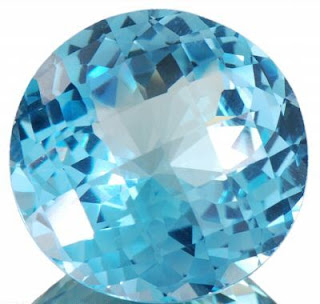
December's Birthstone: The Blue Topaz
Image
Blue Topaz is the birthstone of December (blue topaz), it is a talisman for the sign of Sagittarius and the suggested anniversary gemstone for the 4th, 19th or 23rd year of marriage. The name topaz comes from the Sanskrit and means fire. Topaz occurs in a wide range of colors including red, orange, peach, pink, gold, yellow, brown and clear and is found in Brazil, Sri Lanka, Pakistan and Russia. Naturally pale to medium blue topaz is enhanced by irradiation to produce a more intense blue color. Red and pink topaz gems were used in the jewelry of the 18th and 19th Century Russian Czarinas and is why topaz is sometimes called "Imperial Topaz". The most famous topaz is actually a colorless topaz that was originally thought to be a diamond. It is a 1680 carat stone known as the "Braganza Diamond" set in the Portuguese Crown Jewels. Another beautiful topaz is in the Green Vault in Dresden which has one of the world's most important gem collections. Al...

June's Birthstone: The Pearl

Image
Pearl is the official birthstone for the month of June as adopted by the American National Association of Jewelers in 1912. It is also the birthstone for the Sun Signs of Gemini and Cancer.  Fresh water pearls are given on the 1st wedding anniversary. Pearls are also given on the 3rd, 12th and 30th anniversaries. Pearls are formed inside mollusks such as oysters and mussels. They are formed when an irritant such as a tiny stone or bit of sand gets inside the mollusk's shell. A lustrous substance, called nacre, is secreted around the object to protect the soft internal surface of the mollusk. Layers of nacre coat the irritant, and a  pearl is formed. Light that is reflected from these overlapping layers produces a characteristic iridescent luster. This process can take up to seven or eight years. The most valuable pearls are perfectly symmetrical, relatively large and naturally produced. They have a shimmering iridescence which is called orient luster. The principal oyster b...

February's Birthstone- The Amethyst

Image
Amethyst is the purple variety of quartz and the most valued member of the quartz family. It must be purple to be amethyst, but it can display a range of shades including deep purple, light lilac, lavender and mauve. Top quality amethyst is a deep medium purple with rose-colored flashes. Its purple color made it a stone of royalty for many thousands of years.  Throughout history amethyst has been used to guard against drunkenness and in overcoming addiction. It has been used for hearing disorders, insomnia, headaches and other pain. It has been suggested that it is used to stabilize mental disorders. It is thought to make the wearer gentle and amiable. Amethyst "powers" include: dreams, healing, peace, love, spiritual fulfillment, courage,  psych ism, protection against thieves, and happiness.

January's Birthstone- The Garnet

Image
Garnets as a group are relatively common in highly  metamorphosed  rocks and in some  igneous  formations. They form under the high temperatures and/or pressures that those types of rocks must endure. Garnets can be used by geologists as a gauge of how much temperature and pressure the rock has endured.  As a  gemstone ,  garnets possess high indices of refraction, are hard enough, have pretty colors, are wonderfully transparent, lack cleavage and are durable; thus making good candidates for gemstones. Garnets are greatly variable in colors and varieties,and many of these are both rare and beautiful, producing genuinely precious gemstones. Some garnets are truly unique in the mineral kingdom and have much to offer as both gemstones and mineral specimens. The gemstone Garnet is the official birthstone for January as adopted by the American National Association of Jewelers in 1912. It is also the stone for the Zodiac sign Aquarius. Garnet may be giv...

November's Birthstone- The Citrine

Image
This birthstone’s name comes from the French word for lemon, “citron”. It is the most abundant mineral, and signifies light-heartedness. One often wears citrine to have more happiness enter their lives. Some also call it the “jewel of the sun”. Citrine is a variety of quartz ranging in colors of yellow, yellow-brown, orange, dark orange-brown, reddish-brown. Citrine crystals can form together with amethyst or smoky quartz to form a bi-colored quartz called ametrine. Citrine is believed to help the heart, kidney, digestive tract, liver and muscles. It promotes creativity, helps personal clarity and eliminates self-destructive tendencies.